Six short conversations — small talk, a phone call, a restaurant, a store, a neighbor, family. Real lines from Habloro's stories, each with its own audio. Play a conversation, tap any bubble for the English, then take a role and say it out loud.
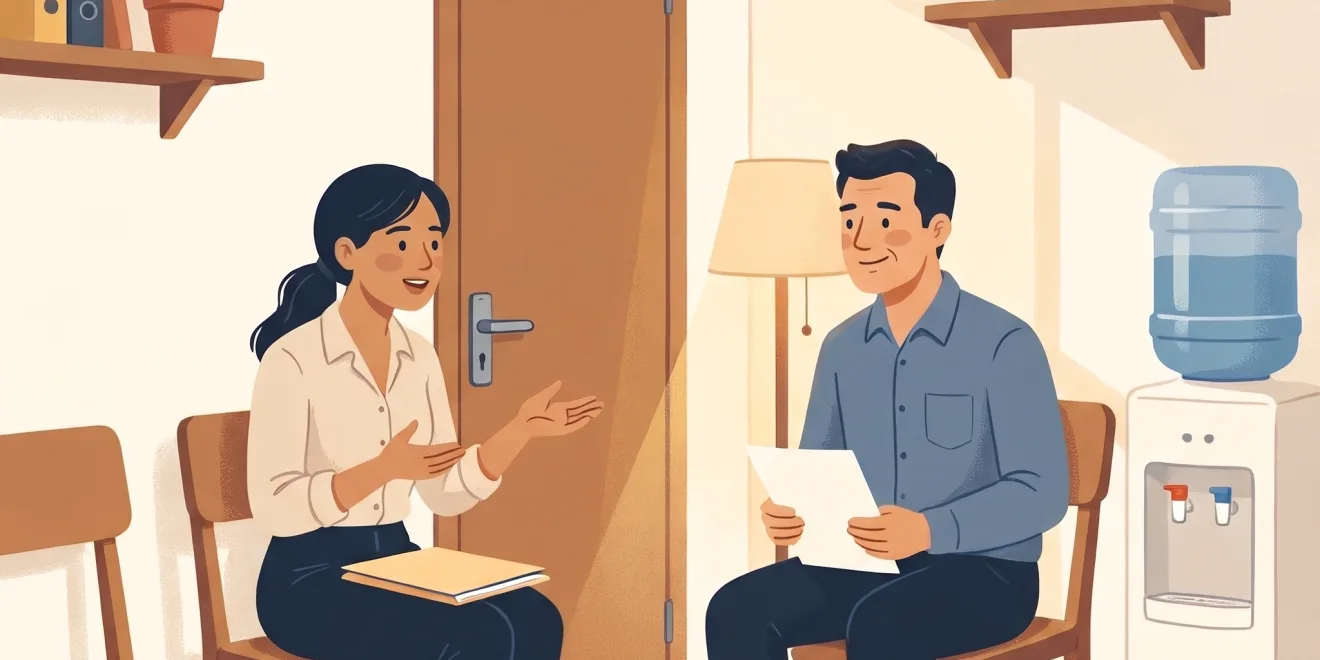
Alejandra is early for a job interview. The only other person in the waiting room is a man with a paper in his hand — another candidate, she thinks.
From the story La sala de espera (The Waiting Room) · Alejandra and the man
Alejandra
The man
Alejandra
Alejandra
The man
Alejandra
Alejandra
Él decía que sí con la cabeza, pero seguía mirando la puerta.He nodded, but he kept looking at the door.
Alejandra
Alejandra
The man
Phrases to keep
Tap a phrase to keep it. Your list builds up at the end of the page.
How does it end?
The secretary walks right past Alejandra, signs the man's paper and reminds him where the water jug goes. He's the water delivery man — and Alejandra is the only candidate today.
Situation 2 · On the phone
Answering someone else's phone
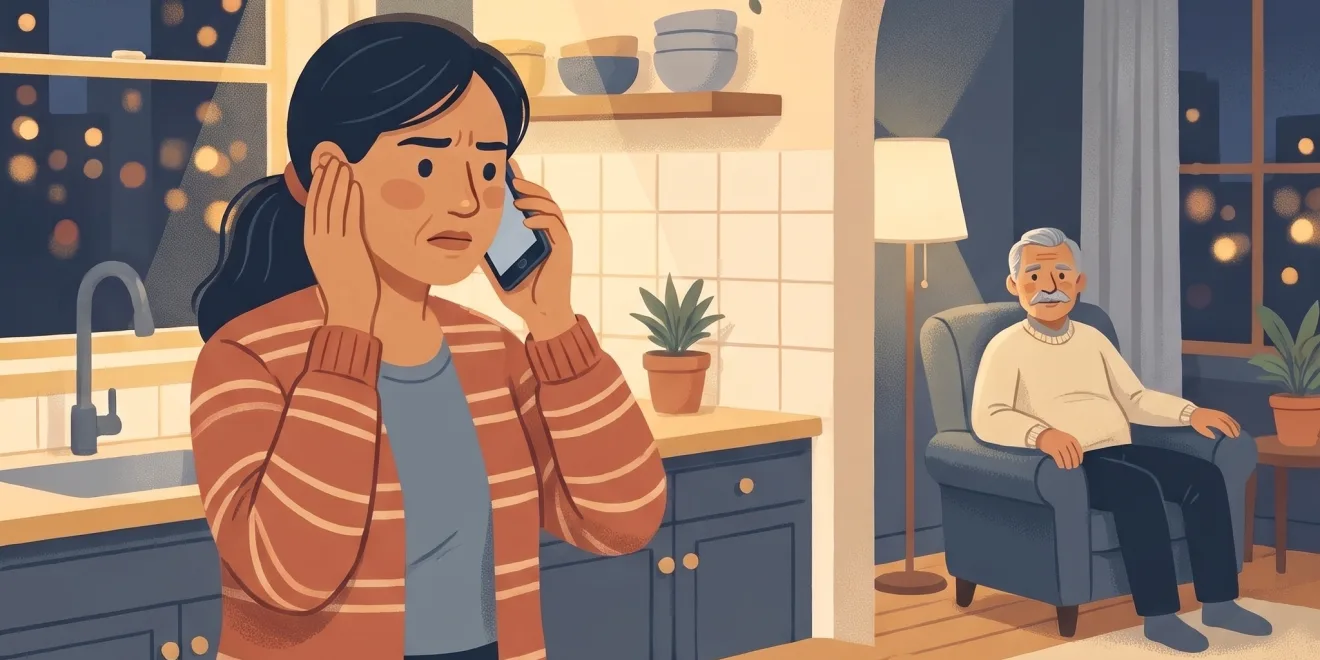
On the beach, Andrés picks up a phone that looks exactly like his. It rings, and he answers before he notices it isn't his.
From the story El arroz de la abuela (Grandma's Rice) · Andrés and the grandmother
Andrés
The grandmother
The grandmother
Era la voz de una señora mayor, y no me dejaba hablar.It was the voice of an older lady, and she wouldn't let me talk.
The grandmother
Andrés
The grandmother
The grandmother
Phrases to keep
Tap a phrase to keep it. Your list builds up at the end of the page.
How does it end?
Andrés walks the beach with the phone at his ear, looking for the owner, while the grandmother keeps going with her recipe. When he finds her grandson, she asks to talk to “the nice young man” again — the flan is still to come.
Situation 3 · At a restaurant
Booking a table — and a problem at the door
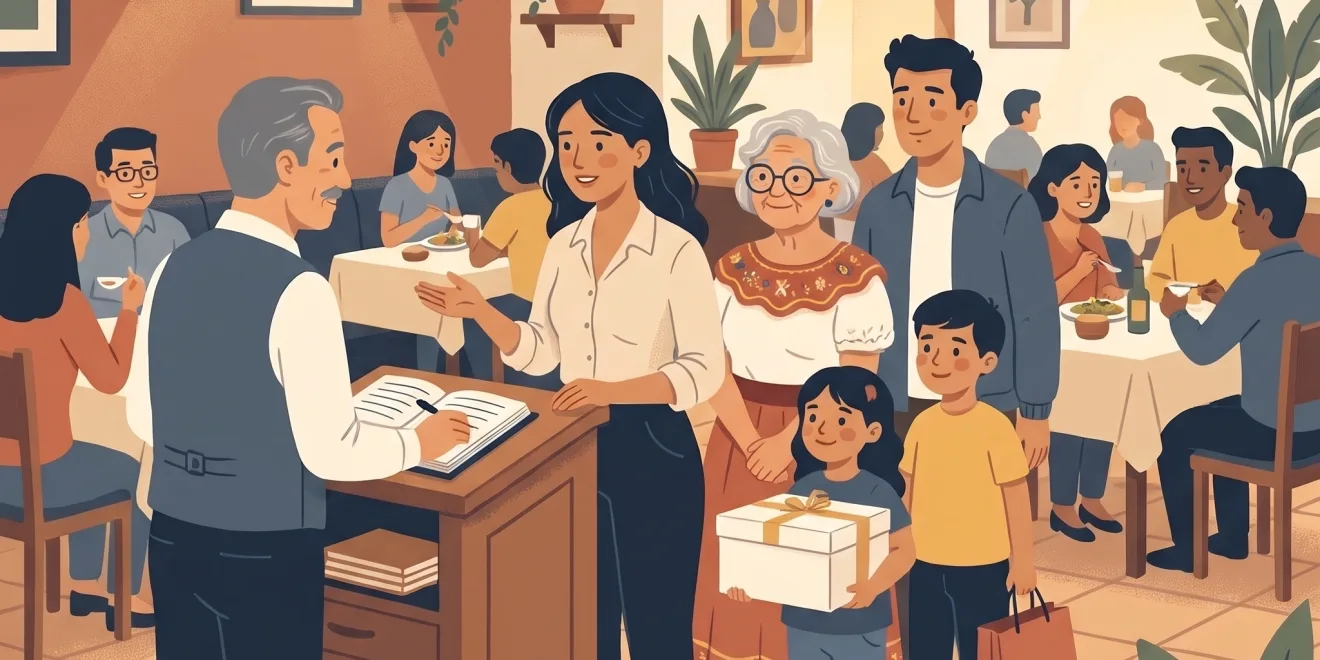
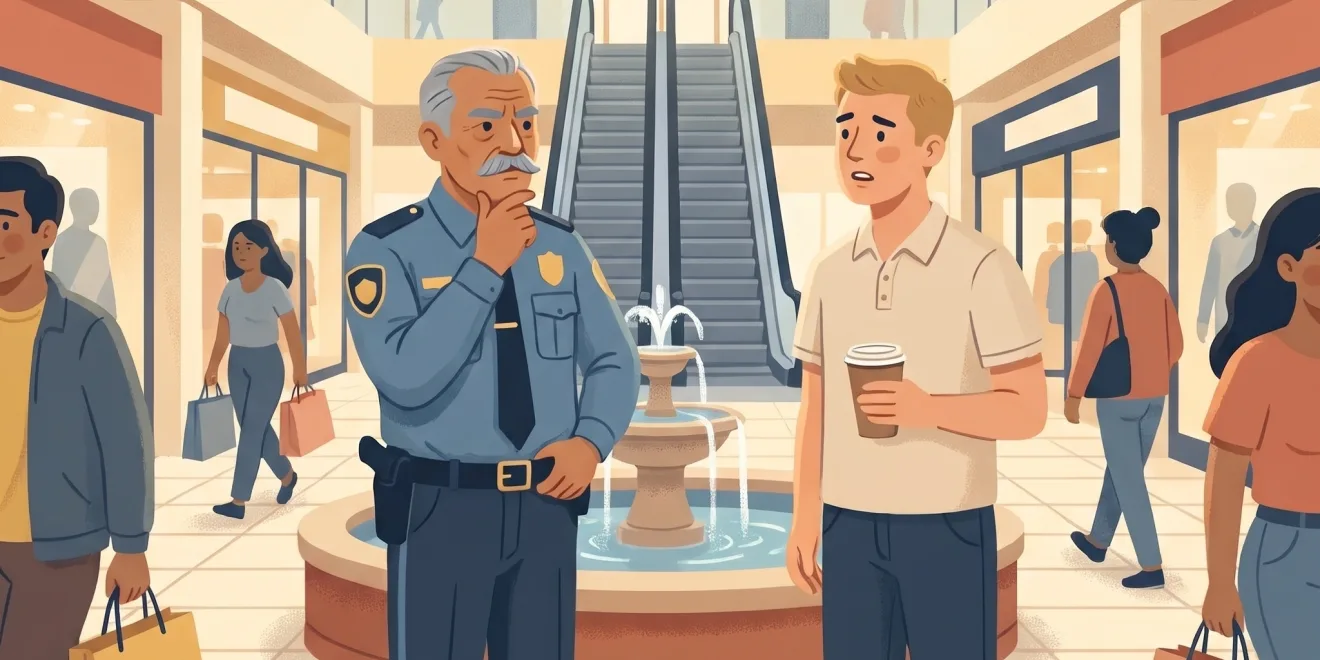
Estela calls a busy restaurant to book a table for her mom's birthday lunch. On Saturday at two, the whole family arrives.
From the story Una mesa para ocho (A Table for Eight) · Estela, the man on the phone and the manager
El martes llamé para hacer una reservación.On Tuesday I called to make a reservation.
Estela
The man on the phone
En la entrada, el gerente buscó mi nombre en su libro.At the entrance, the manager looked for my name in his book.
The manager
Estela
The manager
Estela
Estela
The manager
Estela
The manager
Phrases to keep
Tap a phrase to keep it. Your list builds up at the end of the page.
How does it end?
The manager puts two little tables together on the patio, in the sun. At the end, a young waiter brings a flan with a candle — and asks if they're coming at eight too.
Situation 4 · In a store
Choosing new glasses — without your glasses
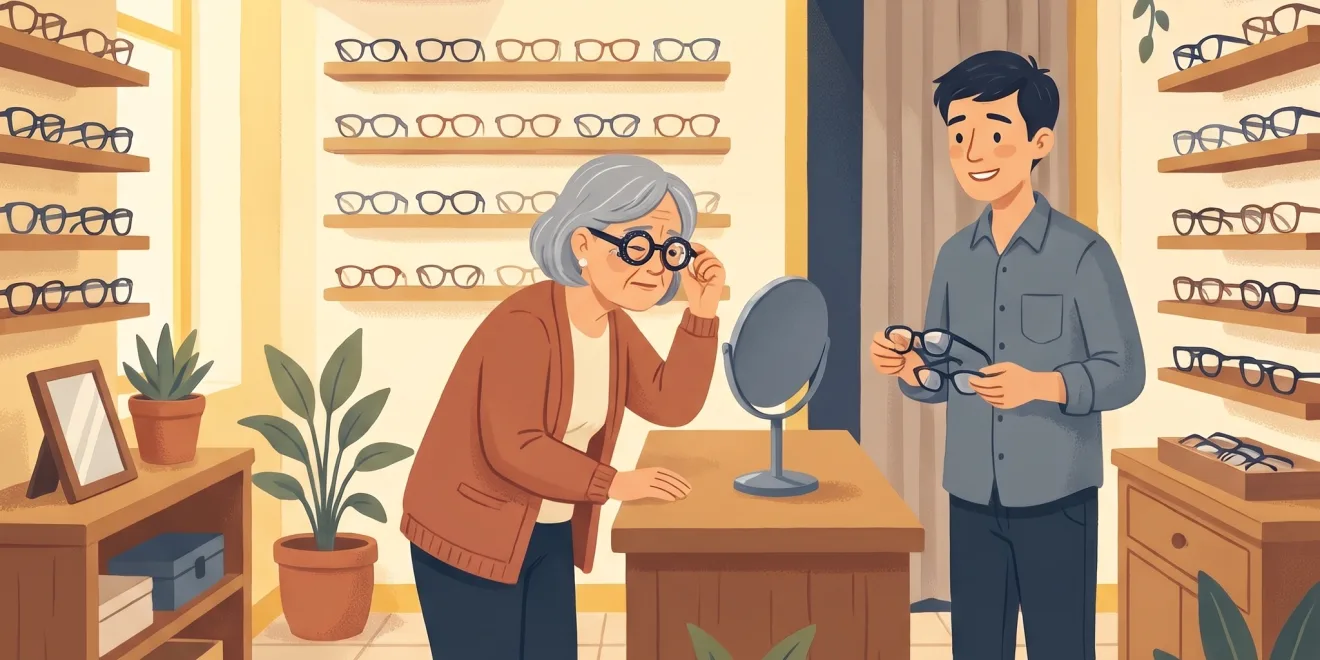
Marta sat on her glasses. Now she's at the optical shop on her own for the first time — and without glasses, she can hardly see herself in the mirror.
From the story Los lentes rojos (The Red Glasses) · Marta and Iván
Iván
Marta
Iván
Marta
Sin mis lentes, yo no veía casi nada en el espejo.Without my glasses, I could hardly see anything in the mirror.
Marta
Iván
Marta
Marta
Iván se rio, pero le gustó la idea.Iván laughed, but he liked the idea.
Iván
Marta
Phrases to keep
Tap a phrase to keep it. Your list builds up at the end of the page.
How does it end?
Iván takes twelve pictures, one with each frame. Marta holds the phone close to her eyes and picks the red pair — the one where she's smiling. This time she doesn't ask her daughter's opinion.
Situation 5 · With a neighbor
Apologizing to a neighbor
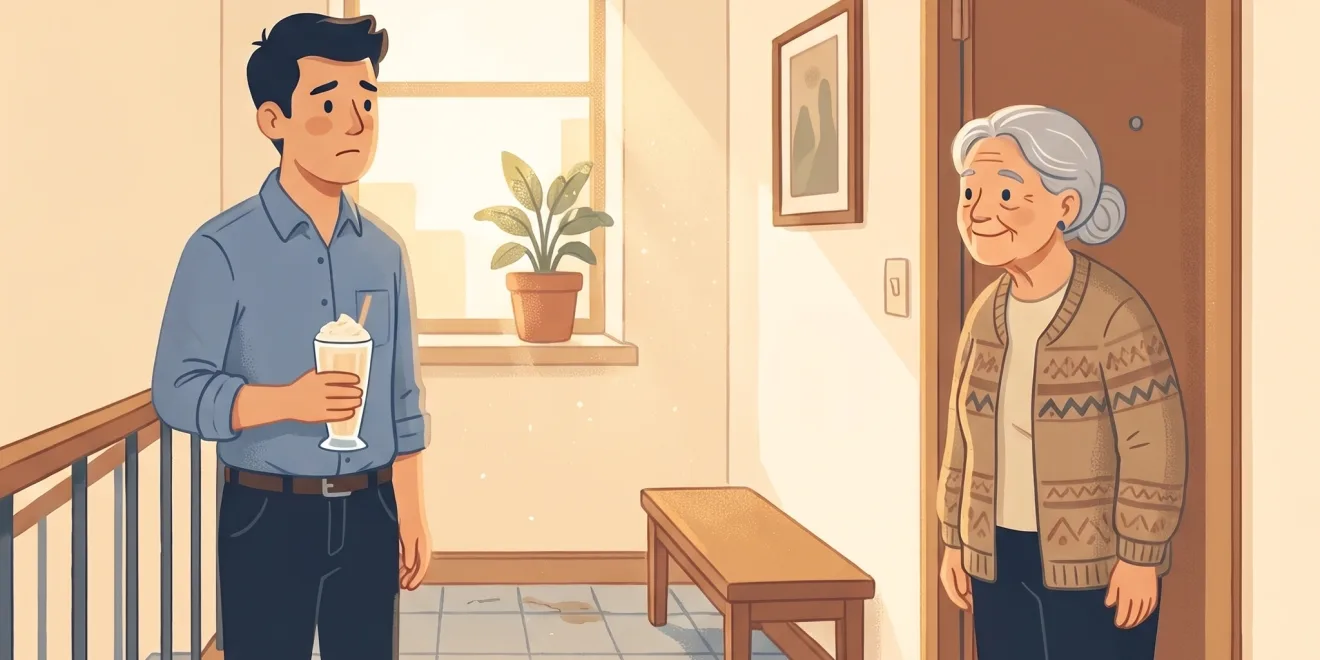
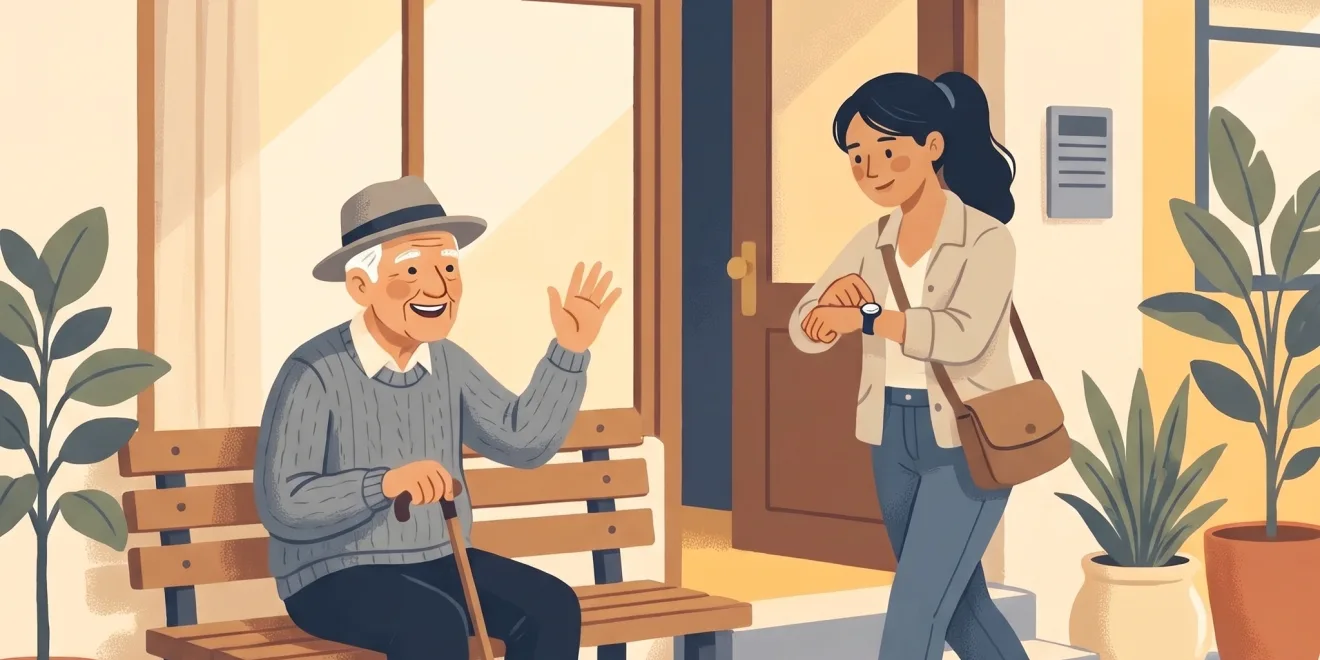
Every morning at seven, Rodrigo's old blender sounds like a plane. His downstairs neighbor keeps leaving him notes, so he goes down to apologize.
From the story ¿A qué hora sale? (What Time Are You Leaving?) · Rodrigo and Doña Ofelia
Doña Ofelia abre la puerta con una sonrisa.Doña Ofelia opens the door with a smile.
Rodrigo
Doña Ofelia
Rodrigo
Doña Ofelia
Doña Ofelia
No sé qué decir.I don't know what to say.
Doña Ofelia
Rodrigo
Phrases to keep
Tap a phrase to keep it. Your list builds up at the end of the page.
How does it end?
That afternoon he buys the loudest alarm clock in the store and leaves it at her door with a note: it goes off at seven, but it doesn't make smoothies.
Situation 6 · With family
Telling your mother-in-law the truth
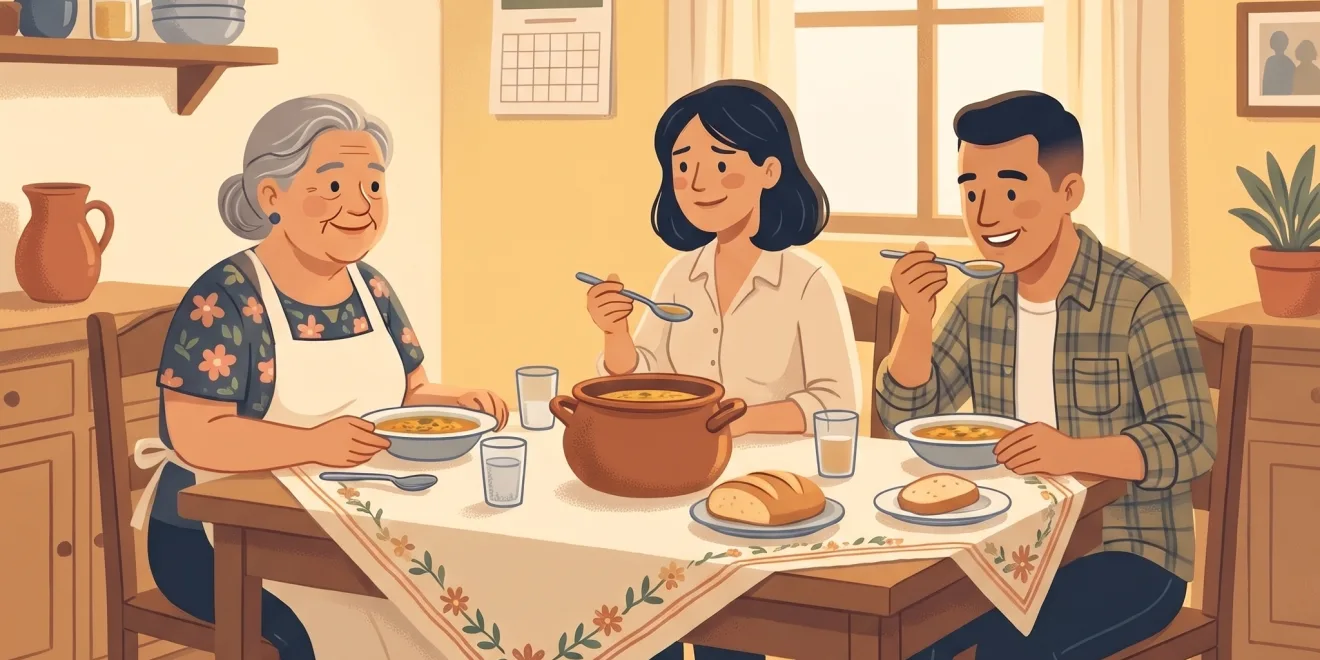
Karina's first Sunday lunch at her mother-in-law's. The special soup is full of mushrooms — and Karina can't eat mushrooms. Her husband, Beto, is no help.
From the story La sopa de Karina (Karina's Soup) · Karina, Doña Lupe and Beto
Doña Lupe
Beto
Karina
Doña Lupe
Respiro despacio y por fin decido decir la verdad.I breathe slowly and finally decide to tell the truth.
Karina
Karina
Karina
De repente, mi suegra se ríe muy fuerte.Suddenly, my mother-in-law laughs really loud.
Doña Lupe
Doña Lupe
Phrases to keep
Tap a phrase to keep it. Your list builds up at the end of the page.
How does it end?
The next Sunday there are two pots on the table: the mushroom soup for everyone, and a noodle soup without a single mushroom — just for Karina.
Spanish conversation practice on your own
You don't need a partner to start. You need a few lines you understand, a voice to copy, and five minutes where you can talk out loud.
Listen to the whole conversation once. Turn English on if you need it. Just follow who says what and why.
Shadow one line at a time. Tap ▶ on a line, pause, and say it out loud right away. Copy the rhythm and the melody, not only the words. Two or three times per line is plenty.
Take a role. Press “Your turn”. The other person's lines play; when it's your line, you get a pause to say it, and then you hear the original to compare.
Cover the Spanish. Turn Spanish off, read the English, and say the Spanish line from memory. Tap the bubble to check yourself.
Come back another day. Saying the same conversation again tomorrow, and again in a few days, does more than saying it ten times today.
Practicing alone won't replace talking to people. But it gives you lines you have already said out loud — and that makes the first real conversation a smaller step.
Your phrases
In the Habloro app, every word you keep comes back for practice tomorrow, then in 3, 7 and 21 days — always in the sentence where you met it.
Everyday Spanish phrases from these dialogues
Spanish
English
mucho gusto
nice to meet you
Vengo a una entrevista
I'm here for an interview
nada más
that's all
Un consejo
a piece of advice
lo voy a intentar
I'm going to try
Bueno
Hello (answering the phone)
¿quién habla?
who's speaking?
por fin
finally
pon atención
pay attention
una mesa para ocho
a table for eight
creo que hubo un error
I think there was a mistake
Lo siento
I'm sorry
A ver
let's see
ahorita
right now
¿en qué le puedo ayudar?
how can I help you?
es que
the thing is
¿cómo me veo?
how do I look?
bien padre
really cool
me llevo
I'll take
Disculpe
sorry
¿la desperté?
did I wake you up?
Desde hace meses
for months now
No se preocupe
don't worry
¿Te gusta, mija?
do you like it, honey?
todo se ve muy rico
everything looks really good
tengo que decirle algo
I have to tell you something
no me caen bien
don't agree with me
Questions
Who is speaking in these dialogues?
Every line comes from a Habloro story, read sentence by sentence by one voice. The names above the bubbles tell you who says each line in the story.
Why do people say usted in some lines and tú in others?
Listen to who's talking. Strangers, clerks and older neighbors get usted («¿Usted también viene por el puesto?»). A mother-in-law talking to her son's wife uses tú («¿Te gusta, mija?») — and Karina still answers with usted.
What level are these conversations?
About A2: you know the basics and can follow short, everyday sentences. If most lines feel new, turn English on and start with shadowing.
Every Habloro story is full of lines like these. Tap a sentence for the English, keep the words you want, and they come back for practice on a schedule.
 Habloro